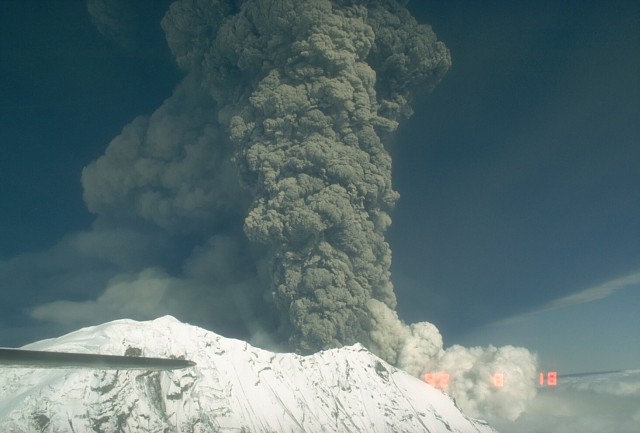
Eruption of the Century: Mount Spurr Unleashes Fury
In a breathtaking display of nature's unbridled power, Mount Spurr, located in Alaska, has erupted, sending shockwaves throughout the region and beyond. The eruption, which has been classified as a "Red Alert," has prompted thousands to flee the area as a dense volcanic ash cloud envelops the surroundings, casting a gloomy shadow over the landscape. The incident marks one of the most significant volcanic events in recent history, highlighting the awe-inspiring and sometimes terrifying beauty of geological phenomena.
The volcanic ash cloud, a direct result of the Mount Spurr eruption, has been reported to be spreading rapidly, affecting not only the immediate vicinity of the volcano but also distant areas. This widespread dispersion of ash poses significant risks to both the environment and human health, underscoring the importance of immediate and effective response measures. As the situation continues to unfold, the phrase "Red Alert Mount Spurr Erupts In Alaska Thousands Flee As Volcanic Ash Cloud Envelops The Region" has become synonymous with the chaos and urgency that defines this moment.
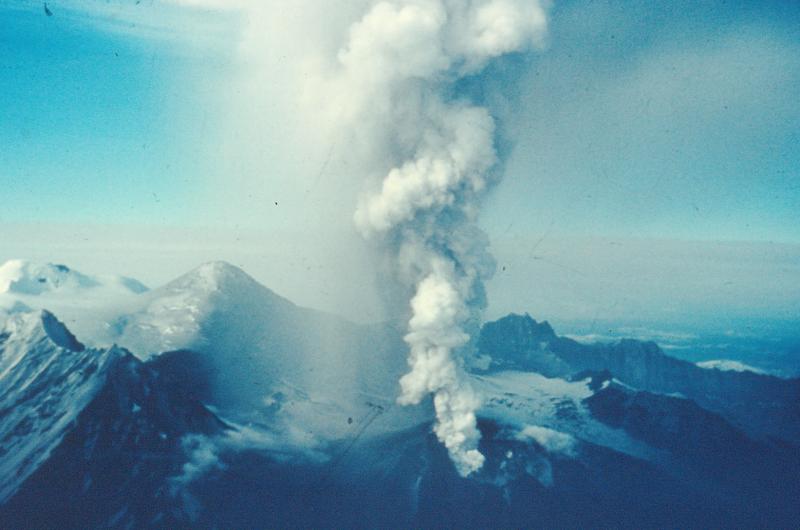
Understanding the Volcanic Ash Cloud: Risks and Implications
The volcanic ash cloud resulting from the Mount Spurr eruption is a complex mixture of small particles, including ash, sulfur dioxide, and other gases. These particles can have devastating effects on the environment, including damage to crops, contamination of water sources, and disruption of local ecosystems. Furthermore, the inhalation of ash particles can lead to respiratory issues in both humans and animals, making it a significant public health concern. The situation demands careful monitoring and management to mitigate the adverse effects of the ash cloud, with the "Red Alert Mount Spurr Erupts In Alaska Thousands Flee As Volcanic Ash Cloud Envelops The Region" situation serving as a stark reminder of nature's potential fury.
As the ash cloud spreads, it also poses a significant threat to aviation, potentially causing engine failures and other safety hazards for aircraft. This has led to the issuance of flight restrictions in the affected areas, further complicating the situation for those attempting to flee or provide aid. The multifaceted challenges presented by the volcanic eruption and subsequent ash cloud dispersion highlight the need for a comprehensive response strategy, encompassing environmental protection, public health measures, and safety protocols.
- •Real Madrid's Resounding Victory: Unpacking The Player Ratings That Sealed Celta Vigo's Fate
- •Prince William And Taylor Swift Collaborate On Surprise Duet A Royal Romance Reborn
- •Purposeful Domination: The Unstoppable Rise Of Air Jordan 4 Collaborations
- •Splashing Into Safety: A Parent's Ultimate Guide To Safe Swimming Pools For Young Kids
- •Revolutionizing Education: A Comprehensive Guide To Rubrik Penilaian Presentasi Kurikulum Merdeka
Response and Evacuation Efforts
In response to the "Red Alert Mount Spurr Erupts In Alaska Thousands Flee As Volcanic Ash Cloud Envelops The Region" situation, local authorities have launched evacuation efforts, prioritizing the safety of those in the immediate vicinity of the volcano. The evacuation process has been facilitated by emergency services and volunteer groups, who are working tirelessly to ensure that everyone at risk is relocated to safer areas. Despite the challenges posed by the spreading ash cloud, the response efforts have been praised for their efficiency and compassion, reflecting the community's resilience in the face of adversity.
Looking Ahead: Recovery and Reflection
As the situation surrounding the Mount Spurr eruption continues to evolve, it is essential to look ahead to the recovery phase, during which the focus will shift from immediate response to long-term rebuilding and restoration. This process will involve not only the physical reconstruction of damaged areas but also the emotional and psychological support of those affected by the disaster. The "Red Alert Mount Spurr Erupts In Alaska Thousands Flee As Volcanic Ash Cloud Envelops The Region" event serves as a poignant reminder of the importance of preparedness, community solidarity, and the unyielding spirit of resilience in the face of natural disasters.
The eruption of Mount Spurr also prompts a broader reflection on our relationship with the natural world. It underscores the need for a balanced approach to environmental conservation and human development, recognizing both the beauty and the potential dangers that natural phenomena like volcanoes embody. As we move forward, it is crucial to integrate the lessons learned from this event into our strategies for managing and mitigating the impacts of similar disasters in the future, ensuring that we are better equipped to face the challenges posed by an ever-changing and sometimes volatile world.
Conclusion: A New Chapter for Alaska
In the aftermath of the Mount Spurr eruption, Alaska stands at the threshold of a new chapter, one marked by both challenge and opportunity. The "Red Alert Mount Spurr Erupts In Alaska Thousands Flee As Volcanic Ash Cloud Envelops The Region" situation has united the community in a shared experience of resilience and hope, demonstrating that even in the face of overwhelming adversity, the human spirit can prevail. As the region begins its journey towards recovery and growth, it does so with a renewed appreciation for the natural world and a deepened commitment to the well-being of its people and the environment.
For more details and authoritative references, refer to the official documentation on Wikipedia.